

The UK government recently introduced provisional anti-dumping duties ranging from 24.65% up to 52.97% on certain glass bottles, jars, and phials imported from China.
Importers relying on inexpensive overseas glass are now facing sudden, steep cost increases and supply chain uncertainty. For brands that have relied heavily on imported glass packaging for many years, the operational and financial implications are significant.
Yet while much of the discussion has focused on the tariffs themselves, the situation prompts a wider question.
Is the packaging landscape changing?
Rising costs, evolving environmental legislation, and increasing pressure on supply chain resilience continue to push businesses to view packaging decisions more broadly. Material selection today is no longer just about appearance or unit price. Increasingly, it’s about balancing commercial performance, sustainability goals, and operational practicality.
The latest tariffs are simply another factor influencing that conversation.
The direct financial impact is clear. Additional duties increase the landed cost of imported packaging, placing extra pressure on budgets and margins. However, the total impact often reaches beyond the tariff itself.
Importers also have to navigate customs requirements, product classifications, and additional administrative processes that can add both cost and complexity. When these factors combine with transportation costs and longer supply chains, businesses may find the true cost of imported packaging is considerably higher than initially expected.
At the same time, many organisations are adapting to Extended Producer Responsibility (EPR) requirements, which place greater emphasis on packaging weight and recyclability. Because heavier or less widely recyclable materials can attract higher compliance costs, packaging decisions increasingly affect not only purchasing budgets but also wider business liabilities.
Taken together, these developments highlight how rapidly the packaging environment is evolving.
Challenging long-held assumptions
For many brands, this may be the right moment to step back and challenge some long-held assumptions:
- Does premium necessarily mean heavy?
- Does sustainable always mean traditional materials?
- And are the packaging choices made five or ten years ago still the most appropriate today?
Packaging technology has moved forward considerably.
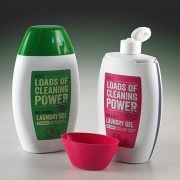
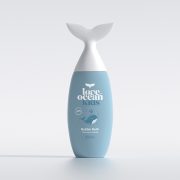
Modern PET and HDPE solutions can deliver the strength, performance, and visual appeal expected of premium products while adding commercial and operational benefits. Heavy-wall PET jars, for example, can achieve a high-quality look and feel that closely resembles glass while significantly reducing transportation weight and the risk of breakage throughout the supply chain.
This shift is equally relevant for sustainability discussions.
Environmental performance is increasingly measured through a wider lens than material type alone. Recyclability, recycled content, transportation emissions, and lifecycle impact all play an important role in determining a package’s overall environmental footprint.
High levels of Post-Consumer Recycled (PCR) content can help businesses support circular economy objectives while reducing reliance on virgin materials. At the same time, lighter-weight packaging can contribute to lower transport emissions, helping brands reduce Scope 3 carbon impacts across their supply chains.
Ahead of the regulatory curve
Under the UK’s Extended Producer Responsibility (EPR) scheme, the Recyclability Assessment Methodology (RAM) rates packaging on a Red, Amber, and Green scale to determine producer fees.
Designed specifically for circular economy success, nearly all Spectra’s products achieve a Green EPR RAM rating. By choosing packaging designed from the outset for kerbside recyclability and ease of sorting, brands can easily take the stress out of compliance, lower their EPR fee exposure, and avoid unnecessary tax liabilities.
Of course, this doesn’t mean glass is no longer a viable packaging material. In many applications, it remains the most suitable choice.
Current market conditions, however, show the importance of regularly reviewing packaging strategies rather than relying on convention or familiarity. Market forces change, legislation evolves, and customer expectations continue to develop. Packaging solutions that offered the best value yesterday may not offer the best value tomorrow.
Moving forward with Spectra
At Spectra, we believe the most effective packaging decisions are those based on evidence, performance, and long-term value.
As a UK manufacturer, our packaging solutions are not affected by overseas import duties or international trade remedy measures. Through our extensive PET, HDPE, and PCR packaging ranges—engineered to meet Green RAM standards—we work with brands to assess packaging requirements holistically, considering everything from product compatibility and aesthetic objectives to supply chain resilience, regulatory compliance, and environmental impact.
Because ultimately, the conversation isn’t just about tariffs.
It’s about making sure that packaging continues to deliver the right balance of performance, sustainability, and commercial value in an increasingly complex world.
The introduction of glass import duties may create new challenges for some businesses. However, it may also be the perfect opportunity to reconsider whether existing packaging choices still fit the future.
Want to know more? Check out the full government notice here: https://lnkd.in/eGrgXG98